


Dr. Saurabh Kalia (Best GI Surgeon in Jaipur)
Hernia Surgery in Jaipur
Dr. Kalia’s Clinic, Jaipur
Get hernia surgery in Jaipur by Dr. Saurabh Kalia. As the Best Hernia Surgeon in Jaipur, Dr. Kalia is an experienced and compassionate GI surgeon in Jaipur who provides top-notch care for hernia patients. Get relief and regain your health. Book a consultation today!
Request an Appointment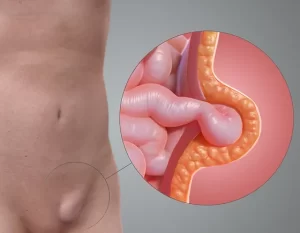
What is a Hernia?
A hernia happens when an internal organ or tissue pushes through a weak spot in the surrounding muscle wall. The most common example is part of the intestine bulging out through a weak area in the abdominal wall, but it isn’t limited to the abdomen — hernias can also show up in the groin or upper thigh.
Most hernias aren’t dangerous right away, but they don’t heal on their own either. Left alone, some can lead to complications, which is why doctors usually recommend getting one checked instead of waiting it out.
Types of Hernia
Hernias are medical conditions in which an organ or tissue protrudes through a weakened area in the surrounding muscle or connective tissue. There are several types of hernias, each categorized based on their location and the organs or tissues involved. The most common types of hernias include:
- Inguinal Hernia: This is the most common type of hernia and occurs when a portion of the intestine or fatty tissue pushes through the abdominal wall or into the inguinal canal in the groin area. Inguinal hernias are more common in men.
- Femoral Hernia: Similar to inguinal hernias, femoral hernias occur in the groin area, but they protrude through the femoral canal, which is lower and closer to the thigh. This type is more common in women.
- Umbilical Hernia: An umbilical hernia involves a protrusion of abdominal tissue or intestine through the abdominal wall near the navel (umbilicus). It is more common in infants but can also occur in adults.
- Hiatal Hernia: Hiatal hernias are different from other hernias in that they involve the stomach protruding through the diaphragm and into the chest cavity through the esophageal hiatus. This can lead to gastroesophageal reflux (GERD) symptoms.
- Ventral Hernia: Ventral hernias can develop anywhere on the abdominal wall, and they are not limited to the groin area. They can occur due to muscle weakness or previous surgical incisions.
Symptoms of Hernia
The most noticeable sign of a hernia is a bulge or lump in the affected area — you can usually see it or feel it under the skin. With an inguinal hernia, for instance, it typically shows up on either side of the pubic bone, right where the groin meets the thigh.
Common symptoms include:
- A visible bulge that gets more prominent when standing, coughing, or straining
- The bulge flattening out or disappearing when lying down
- A dull ache or pressure around the lump, especially by evening
- A burning or aching sensation at the site of the bulge
- Weakness or heaviness in the abdomen or groin
- Pain while lifting, bending, or during physical activity
Hiatal hernias don’t follow this pattern, though — since they involve the stomach pushing up through the diaphragm rather than the abdominal wall, they show up as heartburn, acid reflux, difficulty swallowing, or chest discomfort instead of a visible lump.
It’s also common for a hernia to cause no symptoms at all in its early stages. Many patients only find out they have one during a routine check-up, and it’s still worth getting evaluated at that point rather than waiting for symptoms to appear.
Causes of Hernia
Hernias result from a combination of muscle weakness and strain. The development of a hernia can occur swiftly or gradually, depending on its underlying cause.
Several common factors can lead to muscle weakness or strain, and subsequently contribute to hernias:
- Congenital conditions, which originate during fetal development and are present from birth.
- Aging, as muscles naturally weaken over time.
- Damage from injuries or surgical procedures.
- Engaging in strenuous physical activities or lifting heavy weights.
- Chronic coughing or the presence of chronic obstructive pulmonary disorder (COPD).
- Pregnancy, particularly with multiple pregnancies.
- Constipation, which results in straining during bowel movements.
- Being overweight or obese.
- The accumulation of abdominal fluid (ascites).
Additionally, there are specific risk factors that can increase the likelihood of developing a hernia, which encompass:
- Premature birth or having a low birth weight.
- Advancing age.
- Chronic coughing is often linked to repetitive increases in abdominal pressure.
- Cystic fibrosis.
- Pregnancy.
- Chronic constipation.
- Overweight or obesity.
- Smoking, as it weakens connective tissue.
- A personal or family history of hernias.
Hernia Diagnosis
Diagnosing a hernia typically involves a combination of medical history evaluation, physical examination, and sometimes imaging tests. Here’s how hernias are diagnosed:
Medical History: The Hernia Specialist in Jaipur provider will ask about your symptoms, including any pain, discomfort, or noticeable bulges in specific areas of your body. They will also inquire about your medical history, including previous surgeries or injuries.
Physical Examination: During a physical examination, the healthcare provider will examine the affected area. They may ask you to stand, cough, or strain, as these actions can sometimes make the hernia more prominent.
Imaging Tests: In some cases, especially if the hernia is not easily visible or if there is a need for confirmation, the doctor might order imaging tests such as ultrasound, CT scans, or MRI scans. These tests can provide detailed images of the hernia and help the healthcare provider determine the size and location of the hernia.
Barium X-ray (For Hiatal Hernias): In the case of suspected hiatal hernias, a barium swallow or upper gastrointestinal (GI) series may be performed. This involves swallowing a barium solution that shows up on X-rays, allowing the doctor to see the stomach and esophagus.
Endoscopy (For Hiatal Hernias): An endoscopy involves inserting a thin, flexible tube with a light and camera (endoscope) down your throat to examine the esophagus and stomach. This can help diagnose hiatal hernias and assess the extent of damage caused by acid reflux.
Hernia Treatment in Jaipur
The most effective way to address a hernia is through surgical intervention. The decision of whether or not surgery is necessary depends on the hernia’s size and the severity of the associated symptoms.
Your gastrointestinal (GI) surgeon in Jaipur may opt for a watchful waiting approach, where they monitor the hernia for potential complications without immediate surgical intervention.
In certain instances, wearing a truss may offer relief from hernia symptoms. A truss is a supportive undergarment designed to hold the hernia in place. It’s essential to consult your doctor to ensure a proper fit before using a truss.
For those with a hiatal hernia, there are over-the-counter (OTC) and prescription medications available to alleviate discomfort and improve symptoms by reducing stomach acid production. These medications encompass antacids, H2 receptor blockers, and proton pump inhibitors.
Why Choose Dr. Saurabh Kalia For Hernia Surgery in Jaipur?
Choosing the right hernia surgeon in Jaipur for hernia surgery is a crucial decision, and Dr. Saurabh Kalia (GI Surgeon in Jaipur) might be a suitable choice for several reasons:
Experience and Expertise: Dr. Saurabh Kalia is likely to have extensive experience and expertise in hernia surgery. Surgeons with a history of successful procedures tend to provide a higher level of care and outcomes.
Patient Reviews: Check patient reviews and testimonials about Dr. Saurabh Kalia. Positive feedback from past patients can indicate a surgeon’s skill and patient-centered approach.
Personal Consultation: It’s essential to have a personal consultation with the surgeon. This allows you to discuss your specific case, ask questions, and determine if you feel comfortable and confident in their care.
Patient-Centered Care: Look for a surgeon who prioritizes patient well-being and provides clear information about the procedure, risks, and expected outcomes. A compassionate and approachable attitude is a significant advantage.
Read all the FAQs related to hernia surgery in Jaipur.
FAQ
A hernia is a condition where an internal organ or tissue pushes through a weak spot in the abdominal wall. Whether or not you need hernia surgery depends on the type and severity of your hernia. Your surgeon will assess your specific situation and recommend the best treatment plan.
Hernia surgery cost in Jaipur depends on the type of hernia, the surgical technique (open, laparoscopic, or robotic), and the hospital you choose. Laparoscopic hernia surgery typically costs between roughly ₹40,000 and ₹1,45,000, and tends to be more affordable in cities like Jaipur compared to metros, with robotic-assisted repairs usually priced higher due to the advanced technology involved. The exact cost can only be confirmed after an in-person consultation, so it’s best to book an appointment with Dr. Saurabh Kalia for a personalised estimate.
The smooth recovery after hernia surgery varies depending on the type of hernia and the surgical technique used. In general, most patients can return to light activities within a few weeks, but it may take several months to fully recover. Your surgeon will provide you with personalized post-surgery instructions and a timeline for your recovery.
A 2.5 cm hernia is generally considered small to medium in size. Whether it’s “big” matters less than how it behaves — a small hernia that’s painful, growing, or hard to push back in needs the same attention as a larger one. Dr. Kalia evaluates size along with symptoms before deciding between monitoring and surgery.
There’s no single size that automatically requires surgery — the decision depends on size, location, symptoms, and the risk of complications like strangulation. As a general guide, hernias larger than 2 cm, or ones causing pain, discomfort, or a visibly growing bulge, are more likely to need surgical repair, while small, symptom-free hernias may sometimes just be monitored.
Yes — though uncommon, hernia mesh can fail years after the original surgery through recurrence, mesh migration, or chronic discomfort at the repair site. This is more likely with lower-quality mesh, infection, or if the underlying muscle weakness wasn’t fully repaired the first time. If you’ve had hernia surgery in the past and notice new symptoms, it’s worth getting checked by a hernia specialist in Jaipur for a possible recurrence.
Not every hernia needs immediate surgery — small, symptom-free ones are sometimes managed with watchful waiting. But since hernias don’t heal on their own and can worsen over time, surgery is usually recommended eventually. If you’re unsure where you stand, this guide on whether you need hernia surgery in Jaipur is a good starting point.
Recovery depends on the hernia type and technique used. With laparoscopic or robotic repair, most patients return to light activity within 1–2 weeks and resume normal routines in 4–6 weeks; open surgery can take a little longer. For a week-by-week breakdown, see this guide on smooth recovery after hernia surgery.
Both are minimally invasive with faster recovery than open surgery — robotic surgery offers greater precision for complex or recurrent hernias, while laparoscopic surgery remains a highly effective, cost-efficient choice for most straightforward cases. Dr. Kalia compares the two in detail in this article on laparoscopic vs robotic hernia surgery, and also offers robotic hernia repair in Jaipur for suitable candidates.
Zyadatar laparoscopic ya robotic hernia surgery me patient same-day ya ek raat ke andar discharge ho jata hai, kyunki incisions chhote hote hain aur recovery fast hoti hai. Open surgery ya complicated/large hernia cases me 2-3 din tak hospital stay lag sakta hai. Exact duration hernia ke type aur aapki overall health pe depend karta hai.
Nahi, hernia apne aap kabhi thik nahi hota — kyunki muscle wall ka weak point khud se band nahi hota. Truss ya belt jaisi cheezein temporary comfort de sakti hain, lekin yeh sirf symptom manage karti hain, hernia ko cure nahi karti. Long-term solution ke liye surgery hi ek reliable option hai.
Hernia zyadatar muscle weakness aur strain ke combination se hota hai — jaise heavy lifting, chronic cough, obesity, ya constipation ki wajah se pressure badhna. Aap hernia ke main causes wali detailed guide me padh sakte hain ki kaunse lifestyle factors risk badhate hain aur unhe kaise avoid kiya ja sakta hai.
Haan, large, complex, ya baar-baar hone wale (recurrent) hernia me sirf simple mesh repair kaafi nahi hota — aisi situations me abdominal wall reconstruction surgery jaisi advanced technique ki zaroorat pad sakti hai, jisme abdominal wall ki muscles ko properly reconstruct kiya jata hai.
Zyadatar cases me hernia surgery ko medically necessary procedure mana jata hai, isliye standard health insurance policies me yeh cover ho jaati hai — hospitalization, surgeon fees aur mesh cost sab shamil ho sakte hain. Coverage ka exact scope aapki policy ke terms pe depend karta hai, isliye insurance provider se confirm kar lena best rahega.
Appointment
Make an Appointment


Vikash Jakhar
Dr Saurabh Kalia is a very good and experienced Gastro Surgeon in Jaipur. If I am safe today, it is because of his treatment. Dr. Saurabh Kalia likes to work very carefully and quickly. He saves the patient first. Thank you, boss.
Hari Babu Meena
Thank you so much sir you treated my father-in-law. We did not expect at all that he would be cured like this...your behavior is very commendable and of a high standard...and I have full faith I hope you will continue saving people's lives like this... once again thank you very much, sir.
Om Rajpurohit
I have never seen a doctor like this in the past, very intelligent calm and cool. Best in class
Narendra Sharma
Best treatment and behavior by Dr. Kalia... Really the best experience and treatment
 View All Review